



Towing Lights
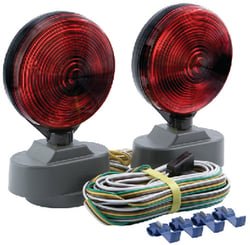

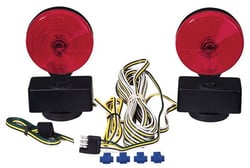

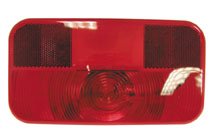
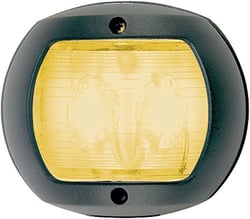

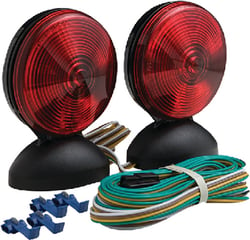
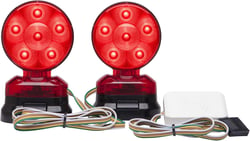
 Representative Photo, actual item may vary

Why Towing Lights Matter on Every Trip
Towing lights are one of the most critical — and most overlooked — safety components on any trailer setup. A trailer changes how your vehicle moves, how long it takes to stop, how wide you turn, and how carefully you need to merge — and drivers behind you cannot feel those changes. They can only see them. That is where trailer lights become critical. Whether you're pulling a boat to the lake, hauling an RV to a campsite, or transporting equipment cross-country, functioning towing lights are your primary communication tool with every driver on the road around you.
Trailer lights serve a crucial role in road safety, providing visibility to other drivers and ensuring compliance with local laws — communicating your intentions when braking, turning, or reversing, and reducing the risk of accidents. Beyond safety, trailer lights are required any time your trailer is on public roads, especially between sunset and sunrise, in low-visibility conditions, or when your trailer blocks the taillights or signals of your tow vehicle — and federal and state laws mandate that trailers must have functioning lights to ensure safety and visibility at all times.
Types of Towing Lights
A complete towing light system typically includes several distinct components, each serving a specific function:
- Tail & Brake Lights: These illuminate with your headlights to create a consistent red glow at the rear of the trailer and alert following drivers when you slow down.
- Turn Signals: Must flash in sync with your tow vehicle to signal lane changes and turns.
- Marker & Clearance Lights: Small, side-mounted lights that enhance the visibility of the trailer, especially in low-light conditions.
- License Plate Light: A white license plate light is required after dark to ensure your plate remains clearly visible to law enforcement and other drivers.
When it comes to light technology, LED tow lights are dominant in modern setups — they work long and maintenance-free, provide fast ignition, and deliver uniform light output. For trailers exposed to water — especially boat trailers that are regularly submerged during launching — it's worth choosing products with a minimum IP 65 waterproof rating, and in harsh conditions IP 68, which provides protection against water, dust, and mud.
Shopping Tips: What to Look For
Choosing the right lighting set should begin with analyzing the trailer's width, length, purpose, and expected load. For small, lightweight trailers, standard combined lamps are sufficient, while large trailers intended for intensive use require a more advanced set — including marker lights, side position lights, and powerful reversing lamps. Also consider connector compatibility: trailers use a wiring harness that connects to your towing vehicle, with the most basic being a 4-way flat connector for brake lights, turn signals, and taillights, all the way up to a 7-way round connector — the most common for larger trailers, supporting electric brakes, auxiliary power, and reverse lights.
Top Towing Light Brands
Custer Products is a leading name in towing and commercial vehicle lighting, known for durable, DOT-compliant light kits and accessories engineered for demanding real-world use on trailers of all types.
Optronics has built a strong reputation in the trailer lighting industry, offering a broad range of submersible, LED, and incandescent towing light solutions designed for both recreational and commercial trailer applications.
Peterson Fluid (Peterson Manufacturing) is a long-established name in vehicle lighting and fluid products, with a heritage of producing reliable marker lights and safety lighting components trusted by trailer owners and fleet operators alike.
Tow Rite rounds out the category with a focused selection of towing light kits and components, offering practical, straightforward solutions for traileristas who need dependable lighting without unnecessary complexity.