



Pulleys
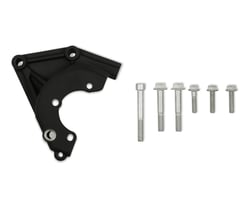
Holley 20-165BK Mid Mount LS/LSA Accessory Drive Bracket Kit with Power Steering - Black

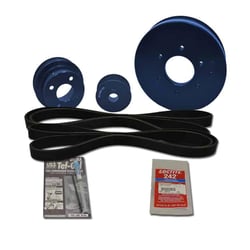
Balmar 48-FSP-100 AltMount Serpentine Pulley Conversion Kit for Ford Lehman FL80 FL120

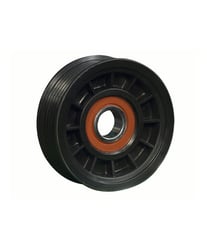

What Are Engine & Drive Pulleys — and Why Do They Matter?
Pulleys are among the most fundamental components in any drive system. A pulley is a wheel on an axle or shaft designed to support movement and change of direction of a taut belt or cable, or transfer power between the shaft and the belt. In engines and outdoor power equipment, pulleys sit at the heart of the drive train — transferring rotational energy from a crankshaft to accessories like alternators, water pumps, air conditioning compressors, and mower decks. Without properly functioning pulleys, a belt will slip, fray, or come off track entirely, causing downstream damage that is far more expensive to repair.
Drive pulleys come in several varieties, each suited to different roles in a system. V-belt sheaves are the most common type found on small engines and industrial equipment, gripping a V-belt along angled groove walls for efficient torque transfer. Idler pulleys don't drive any load directly, but they guide the belt through its routing path and keep the correct tension on the drive. Timing pulleys feature precisely machined teeth that mesh with a synchronous belt to keep the crankshaft and camshaft perfectly in phase. Variable-pitch sheaves allow speed ratios to be adjusted without changing the belt, making them a popular choice for HVAC blowers and industrial machinery with varying load demands.
When replacing a pulley, fit and material quality matter enormously. A pulley with worn grooves or a failed bearing causes belt wear, vibration, and noise — and can ultimately lead to belt failure at the worst possible moment. OEM-spec dimensions, proper groove angles, and high-quality sealed bearings are the hallmarks of a reliable replacement.
Top Pulley Brands
Browning is one of the most storied names in the pulley world, having started manufacturing pulleys in 1886. Today, as part of Regal Rexnord, Browning is widely regarded as a world leader in V-belt drives, offering an extensive range of fixed-diameter sheaves, variable-pitch sheaves, and timing pulleys. OEMs and contractors have long trusted Browning products for their longevity and the breadth of their power transmission lineup.
Briggs & Stratton pulleys are the go-to choice for owners of lawn mowers, riding tractors, pressure washers, and other small-engine outdoor power equipment. As genuine OEM parts, Briggs & Stratton engine and drive pulleys are engineered to meet exact factory specifications, ensuring proper power transfer, reduced vibration, and a precise fit that aftermarket alternatives can struggle to match.
Gates brings deep automotive and industrial expertise to the pulley category. Gates idler pulleys — sold under the DriveAlign™ and PowerGrip™ lines — are built to OE-equivalent or better standards, featuring premium sealed bearings engineered for high operating temperatures and minimal wobble. They guide and tension accessory drive belts serving alternators, power steering pumps, water pumps, and A/C compressors in a huge range of passenger vehicles and light trucks.
ContiTech, the industrial and automotive products division of Continental AG, brings European OEM-level engineering to drive belt tensioners and idler pulleys. ContiTech is recognized as original equipment on many European vehicle makes, and their pulley components are designed to integrate seamlessly with their timing belt kits for a complete, matched drive system replacement.
Key Considerations When Shopping for Pulleys
- Application type: Engine accessory drive, mower deck, industrial blower, or timing drive each call for different pulley designs and materials.
- Belt compatibility: Always match the pulley groove profile (A, B, 5V, serpentine, cogged, toothed) to the belt being used.
- Bore size and hub style: Check shaft diameter and whether you need a plain bore, finished bore, or taper-bushed hub style for proper installation.
- OEM vs. aftermarket: For equipment under warranty or with tight tolerances, OEM-spec parts from brands like Briggs & Stratton eliminate compatibility guesswork.
- Bearing quality: A cheap pulley with a poor bearing will fail prematurely. Look for sealed bearings rated for the load and speed of your application.