



Carbon Monoxide, Smoke & Fume Detectors
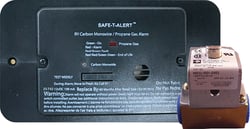
MTI Industries 25742RBLTRKIT Safe-T-Alert Dual CO/LP Alarm with Solenoid Valve and Trim Ring Black

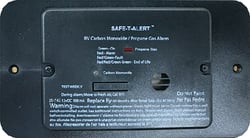
MTI Industries 25742BLTR Dual Propane/Carbon Monoxide Alarm with Black Trim Ring
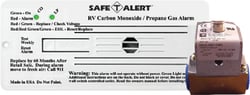
MTI Industries 35742RWTKIT Dual CO & Propane Gas Alarm with Solenoid Valve Kit White
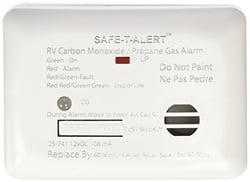
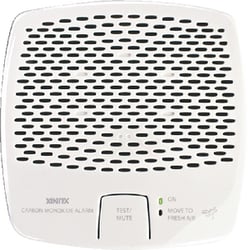

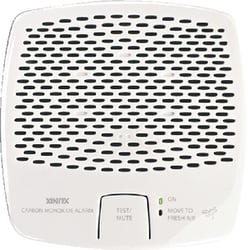
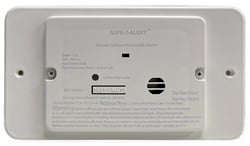
Seachoice 62-542-WT Marine Carbon Monoxide Detector Alarm Flush Mount 12V White

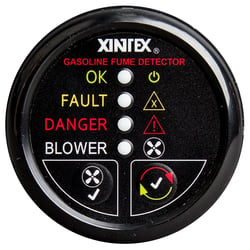
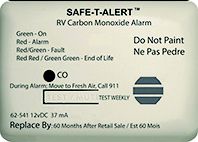
MTI Industries 62-541-WT-MARINE Safe-T-Alert Carbon Monoxide Alarm Surface Mount White
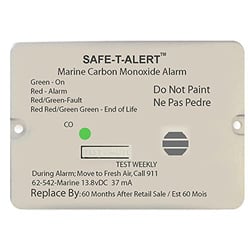

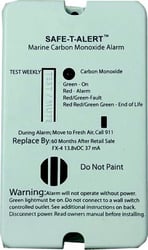
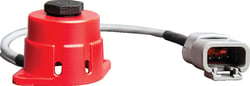
 Representative Photo, actual item may vary
Mti Industries 62-542-WT-MARINE Marine Carbon Monoxide Alarm Flush Mount White
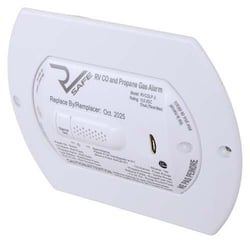
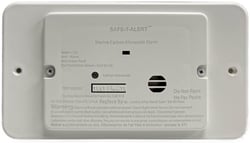
Safe-T-Alert 62-542-WT 62 Series Carbon Monoxide Alarm Flush Mount 12V RV White
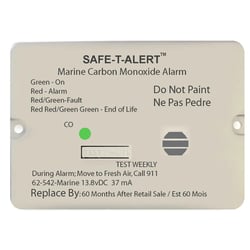
Safe-T-Alert 62-542-MARINE-RLY-NC Carbon Monoxide Alarm 12V with Relay White
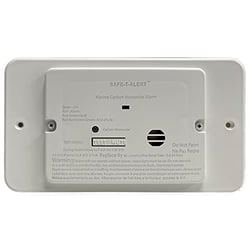
Safe-T-Alert 62-542-TR-WT-M Marine Carbon Monoxide Detector Flush Mount White 12V
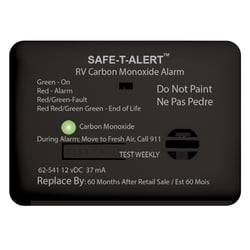
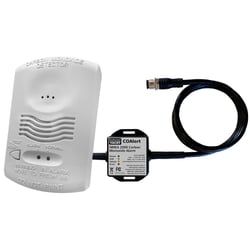

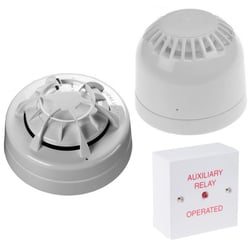

 Representative Photo, actual item may vary
Fireboy CMD5-MBI-R Xintex Carbon Monoxide Alarm with Battery Backup and Interconnect
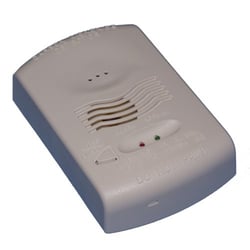
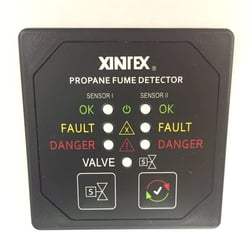
Fireboy P-2BS-R Propane Fume Detector Dual Channel with Solenoid Valve Control and 2 Sensors
 Representative Photo, actual item may vary
 Representative Photo, actual item may vary
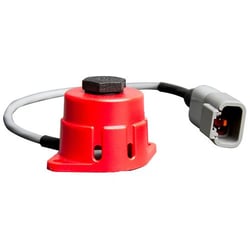
Fireboy FS-T01-R Gasoline & Propane Fume Sensor with 20ft Cable - Red Plastic Housing
- 1
- 2
Why CO, Smoke & Fume Detectors Are Essential for RVs and Boats
Life aboard a boat or RV comes with a unique set of hazards that landlocked living simply doesn't present. Enclosed cabins, onboard generators, propane appliances, and fuel-burning engines can all silently produce dangerous gases or ignite fast-moving fires. Carbon monoxide (CO), smoke, and flammable fumes are among the most serious threats RV travelers and boaters face — and none of them can be reliably detected by human senses alone until it's too late.
Carbon monoxide, smoke, and fume detectors designed specifically for marine and RV environments are built to a higher standard than typical household units. Marine-rated detectors are engineered to withstand vibration, moisture, and the confined spaces found on boats and recreational vehicles — conditions that would quickly compromise a standard residential alarm. Understanding the differences between detector types and knowing where to install them can mean the difference between a close call and a catastrophe.
Types of Detectors: What Each One Does
- Carbon Monoxide (CO) Detectors: CO is a colorless, odorless gas produced by engines, generators, and fuel-burning appliances. Marine-rated CO detectors alert occupants to dangerous buildup before symptoms set in, and many use electrochemical sensors paired with microprocessors to monitor concentration levels over time for accurate, low-false-alarm performance.
- Smoke Detectors: Designed to detect both fast-flaming fires and slow-smoldering combustion. Marine and RV smoke detectors are built to perform reliably in environments where standard household units may fail due to humidity, engine exhaust, or airflow variations.
- Fume / Gas Detectors: These monitor for gasoline or propane leaks that can accumulate in bilges, engine compartments, or enclosed RV spaces, reducing the risk of explosion or fire before a spark occurs.
Key Considerations When Shopping
When selecting a detector for your boat or RV, consider the power source (12V hardwired vs. battery-operated), mounting style (surface vs. flush mount), and whether a combination alarm — one that monitors for both CO and propane simultaneously — suits your setup. Placement matters too: CO detectors should be installed in sleeping areas and main cabin spaces, while fume detectors belong low in bilges or near fuel sources since gasoline vapor is heavier than air. Most marine gas sensors have a limited service life, typically around five years, so regular replacement is part of a sound safety plan.
Top Brands in CO, Smoke & Fume Detection
Fireboy-Xintex is one of the most respected names in marine safety, offering a comprehensive lineup that spans CO alarms, smoke detectors, and gasoline vapor detection systems purpose-built for boats. Their Xintex line includes models with internal relay modules capable of triggering generator shutdowns, and their CMD-series CO alarms feature electrochemical sensors and interconnect capability — making them a top choice for serious boaters who want marine-grade reliability.
MTI Industries, makers of the well-known Safe-T-Alert brand, hold a storied place in RV safety history as the manufacturer of the first UL-approved RV carbon monoxide detector. Their broad lineup of CO, propane, and combination alarms is trusted by RV owners and OEM manufacturers alike, with options available in both surface-mount and flush-mount configurations to fit virtually any installation.
System Sensor brings commercial-grade fire detection expertise to the marine and RV category, offering high-sensitivity smoke detection engineered for demanding environments where reliability and precision are non-negotiable.
RV Safe rounds out the category with focused solutions for recreational vehicle owners, providing straightforward, easy-to-install gas detection alarms designed with the RV lifestyle in mind.