



VHF Emergency Antenna
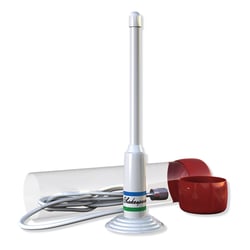

What Is a VHF Emergency Antenna?
When you're out on the water, your ability to call for help depends entirely on one thing: a working antenna. VHF emergency antennas are compact, rapidly deployable backup antennas designed to keep your marine radio operational when your primary antenna system fails — whether from storm damage, a dismasting, chafed cable, or any other unexpected failure. For sailors, powerboaters, and RV travelers venturing into remote areas, carrying an emergency VHF antenna is a critical part of any safety kit.
Why Your Primary Antenna Isn't Always Enough
VHF emergency antennas exist because primary antenna systems are vulnerable. Masthead-mounted antennas on sailboats offer excellent range due to their height, but a dismasting — one of the most dramatic marine emergencies — instantly renders them useless. Even on powerboats, cable damage or connector corrosion can silently degrade or eliminate your antenna's performance at the worst possible moment.
Marine VHF radios operate on a line-of-sight principle, and antenna height directly determines how far your signal can travel. A backup emergency antenna, even one deployed at a lower height, can mean the difference between reaching the Coast Guard on Channel 16 and being stranded without communications. In an emergency, getting any signal out is what matters most.
How VHF Emergency Antennas Work
VHF marine radios operate in the 156–174 MHz frequency range, and Channel 16 serves as the universal international distress and hailing frequency that all vessels are required to monitor. Emergency antennas are designed and tuned specifically for this frequency range so they perform reliably when plugged into either a fixed-mount or handheld VHF radio. Because VHF signals travel in a straight line, elevation matters — most emergency antennas are designed to be lashed to a boat hook, guard rail, fishing rod, or any available vertical structure to maximize signal reach.
What to Look for in a VHF Emergency Antenna
- Compact storage size: An emergency antenna that doesn't fit in your grab bag isn't much help. Look for designs that roll, fold, or collapse to a minimal footprint for easy stowage.
- Fast deployment: In an emergency, every second counts. The best backup antennas can be connected and operational in seconds without tools.
- Connector compatibility: Make sure the antenna includes the right PL-259 or SMA adapters to connect to your specific fixed-mount or handheld VHF radio.
- Weatherproof construction: Marine environments are harsh. Look for materials that are waterproof and corrosion-resistant to ensure the antenna works when called upon.
- Gain and performance: Even a modest 3 dB antenna raised to a reasonable height can extend your range significantly when your primary system is down.
Shakespeare Antennas: A Trusted Name in Marine Communications
Shakespeare Antennas is one of the most recognized names in marine VHF antenna technology. Their product lineup — including the Classic, Galaxy, and Phase III series — is known for using brass and copper internal elements with stainless steel hardware for durability and maximum signal efficiency. Shakespeare's engineering expertise in VHF antenna design makes their emergency antenna offerings a trusted choice for mariners who demand reliability when conditions get dangerous.