



VHF Fiberglass Whip Antennas


Why Your VHF Antenna Is Your Lifeline on the Water
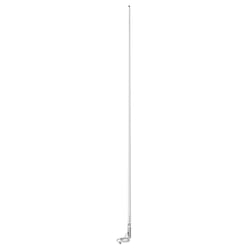
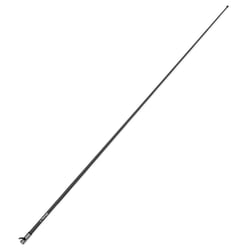
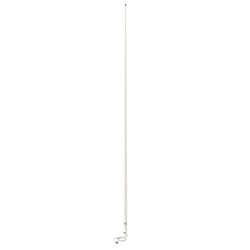
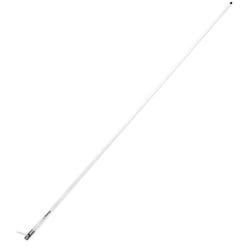
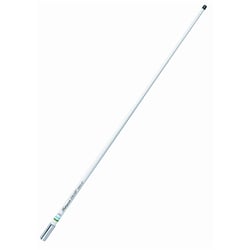
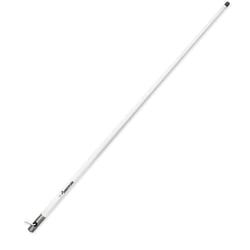
Whether you're navigating coastal waters, heading offshore, or anchored in a busy marina, your VHF radio is your primary tool for communication, weather monitoring, and emergency signaling. But even the best radio is only as good as the antenna it's connected to. VHF fiberglass whip antennas are the most popular choice for powerboats, sailboats, and RVs alike — combining durable construction, reliable signal performance, and resistance to the punishing marine environment.
How VHF Fiberglass Whip Antennas Work
Marine VHF communication operates on frequencies between 156 and 162 MHz. VHF fiberglass whip antennas serve as the critical radiator for that signal, transmitting the power your radio generates and directing it outward so it can reach other vessels and shore stations. Because VHF is essentially line-of-sight communication, antenna height and gain play a major role in how far your signal travels — the higher the antenna is mounted and the greater its gain (measured in dB), the broader your communication range.
Fiberglass construction is the go-to choice for most boaters because it offers the durability and weather-resistance required for life on the water. Quality antennas use brass or copper internal elements for maximum signal efficiency, and sturdier ferrules — the base fittings that connect the antenna to the mount — for long-term structural integrity.
Choosing the Right VHF Fiberglass Whip Antenna
There are several key factors to keep in mind when selecting a VHF fiberglass whip antenna for your vessel:
- Length and Gain: Longer antennas generally offer higher gain. A 4 ft antenna typically delivers around 3 dB of gain, while an 8 ft antenna can reach 6 dB — better suited to larger powerboats and offshore use where maximum range is critical.
- Mounting Height: Since VHF signals travel in essentially a straight line, getting the antenna as high as possible on your vessel dramatically improves range, regardless of the antenna's gain rating.
- Internal Elements: Look for brass or copper elements inside the fiberglass housing, as these materials offer superior conductivity and durability compared to coaxial cable elements.
- Connector and Cable Quality: Most antennas use a PL-259 (UHF) connector and RG-58 coaxial cable. Verify cable length is sufficient for your installation and that the connector is properly weatherproofed.
- Mounting Hardware: A corrosion-resistant base — whether nylon or stainless steel — is essential for marine use, where saltwater and humidity attack metal fittings over time.
- Frequency Coverage: Many modern VHF antennas extend coverage to 162 MHz, picking up NOAA Weather Radio broadcasts in addition to standard marine VHF channels — a valuable feature for situational awareness at sea.
Featured Brand: Cobra Electronics
Cobra Electronics is a well-known name in marine communication, recognized for pairing their VHF radios with purpose-built accessories designed to get the most out of their systems. Their fiberglass whip antennas feature corrosion-resistant dual-swivel nylon bases and extended frequency coverage, making them a natural companion to any Cobra fixed-mount marine radio — and compatible with other VHF radios as well.