



Garmin Autopilot
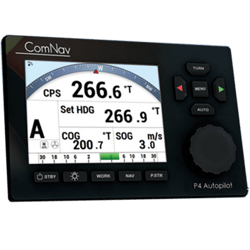
ComNav 10140006 P4 Autopilot Color Pack with Fluxgate Compass and Rotary Feedback

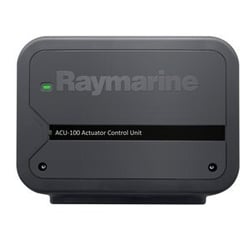

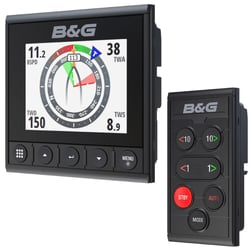

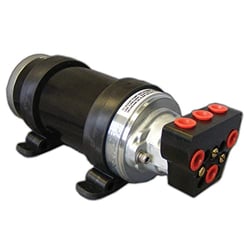
Octopus Autopilot Drives OCTAF2012 12V Reversing Hydraulic Pump for 15-30 Cubic Inch Cylinders

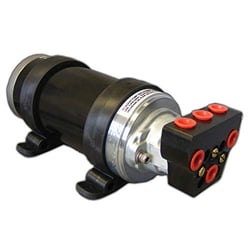
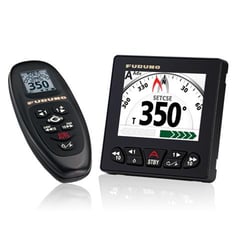
Furuno NAVPILOT 300/PG-M Adaptive Autopilot System with Octopus Hydraulic Pump

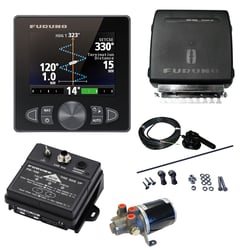
Furuno NAVPILOT 711C-M Autopilot System with 1.6L Octopus Hydraulic Pump
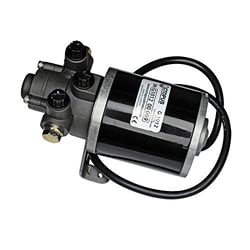
Octopus Autopilot Drives OCTAFG0624 Hydraulic Gear Pump 600cc 24V for 6-9 Cu In Cylinder
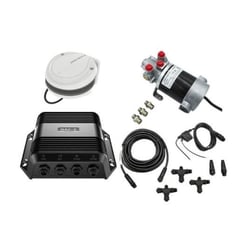
Simrad 00013291002 AP44M-VRF Medium Capacity Autopilot Package with NAC-2 & Precision-9

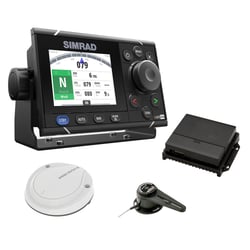
Simrad 000-13900-001 A2004 Autopilot Pack with AC70 Computer & Precision-9 Compass
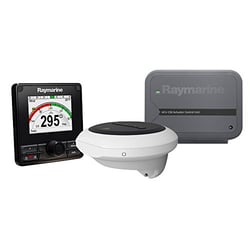
Raymarine T70407 Evolution EV-150 Hydraulic Autopilot Core Pack with p70Rs Control Head
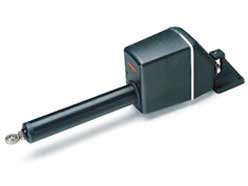
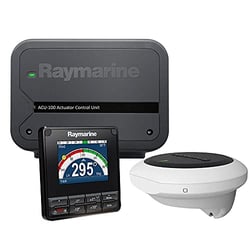
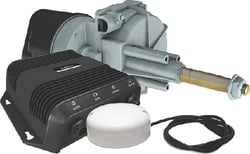
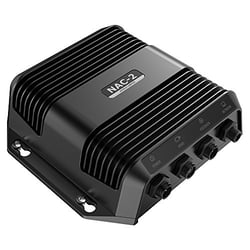
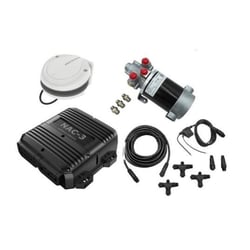
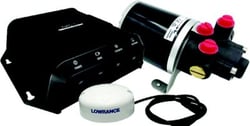
 Representative Photo, actual item may vary

What Is a Marine Autopilot?
Marine autopilot systems are among the most transformative pieces of technology you can install on a boat. Marine autopilots are electronic steering systems that keep a vessel on a chosen course without constant manual input. By linking to the boat's steering gear—hydraulic, mechanical, or electric—and connecting with navigation electronics, a well-chosen autopilot can hold a compass heading, follow a GPS route, or even track a wind angle on a sailboat.
At its core, an autopilot is a closed-loop steering system: it reads the current heading, compares it to the target, then commands the drive unit to correct the error—constantly sampling sensor data and pushing the drive to stay on track. The system typically consists of a course computer, a heading sensor (usually a fluxgate or solid-state compass), a drive mechanism, and a control head. More sophisticated systems may also incorporate rudder angle sensors, rate gyros, GPS receivers, and wind vanes.
Why Every Serious Boater Should Consider an Autopilot
A marine autopilot is more than a convenience—it is a genuine safety and efficiency tool. An autopilot reduces helmsman fatigue on long passages, maintains a more consistent course than most human operators, and can save fuel. It also integrates with radar, AIS, and chartplotters for a more capable navigation setup, freeing the skipper to manage the vessel, handle a fish, or monitor conditions.
Autopilot systems are especially valuable on offshore cruisers and passagemakers, sport-fishing boats that need steady trolling patterns, and long-range center consoles. For short-handed crews, an autopilot is practically essential—it can hold a trolling pattern while you set lines, or maintain course while you handle an emergency on deck.
Key Considerations When Shopping for a Marine Autopilot
- Vessel size and displacement: Autopilots are rated for specific displacement ranges. Always choose a system sized appropriately for your boat—undersized drive units will struggle in anything but calm conditions.
- Steering type: Systems are matched to hydraulic, mechanical, or power-assisted stern drive setups. Match your drive unit to your boat's actual steering configuration.
- Integration: Look for NMEA 2000 compatibility so your autopilot can communicate with your chartplotter, GPS, and other onboard electronics.
- Sail vs. power: Sailboat autopilots may add wind-angle steering modes, while powerboat systems prioritize precise course holding and trolling patterns.
- Response speed: Too slow and the autopilot wanders; too aggressive and it hunts back and forth. Quality systems continuously self-calibrate to find the right balance for your hull.
Top Brands in Marine Autopilot
Raymarine is the dominant name in this category and for good reason. Drawing on decades of autopilot expertise and aerospace guidance technology, Raymarine's Evolution series uses AI-driven adaptive steering algorithms that learn your boat's handling characteristics for accurate course keeping in all sea states. The Evolution line accommodates hydraulic, mechanical, and power-assisted stern drive systems, with a wide range of drive units to match virtually any vessel configuration.
Furuno has long been the choice of professional and commercial mariners who demand reliability above all else. Furuno's NavPilot series integrates seamlessly with the brand's acclaimed NavNet chartplotter ecosystem and offers features like dedicated fishing modes that make it a favorite among serious offshore anglers.
Simrad brings its well-regarded modular electronics philosophy to autopilot, offering systems that pair naturally with its NSS and NSO multifunction display lines. Simrad's autopilot solutions support NMEA 2000 connectivity and Virtual Rudder Feedback technology for outboard and stern-drive boats, making them highly versatile across a wide range of vessel types.
Garmin rounds out the category with its Reactor series autopilots, which integrate tightly with Garmin's GPSMAP chartplotter ecosystem. Garmin autopilots include a heading sensor, actuator control unit, and drive unit, and are known for their clean interface and ease of installation across boats of many sizes.
Lowrance targets the fishing and coastal boating community with autopilot components designed to connect easily to its HDS-series multifunction displays via NMEA 2000, offering an accessible entry point for boaters upgrading their helm electronics.