



Gasoline Filters

Marshall Excelsior Co. MEGR-253H Excela-Flow Two-Stage Automatic Changeover LP Gas Regulator

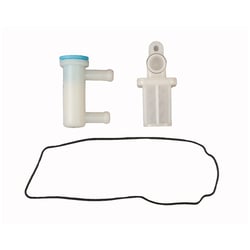
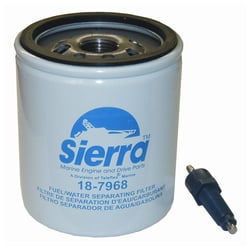
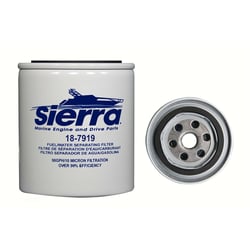
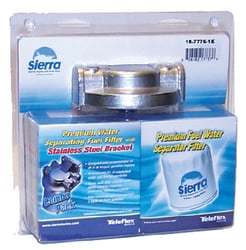


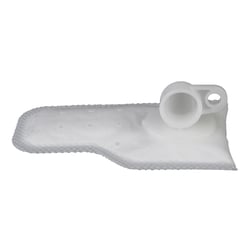
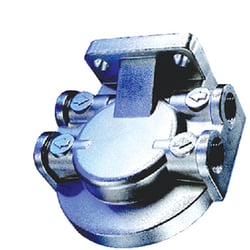
Why Gasoline Filters Matter for Marine and RV Engines
Your boat or motorhome's fuel system is only as reliable as the fuel flowing through it. Gasoline filters serve as the critical first line of defense between your fuel tank and your engine's most sensitive components. Whether you're cruising offshore, navigating a lake, or heading out on the open road in your motorhome, a clean, functioning fuel filter is one of the most cost-effective forms of engine insurance you can carry.
Fuel drawn from marina pumps, storage tanks, or RV campground fill stations can carry a surprising variety of contaminants. Marine and RV gasoline filters are designed to intercept these threats before they cause real damage. As one principle holds: even the smallest bit of dirt or grime can clog fuel injectors — and those injectors are built to extremely tight tolerances. Once contamination reaches them, the result can range from rough idling and hard starts to expensive repairs or complete engine failure on the water or miles from home.
What Gasoline Filters Remove
Gasoline in marine and RV applications faces contamination challenges that go well beyond what a typical automobile encounters. Common threats include:
- Microscopic debris: Fine rust particles from aging tanks or fuel lines, sediment from dirty fill stations, and general environmental particulates that accumulate over time.
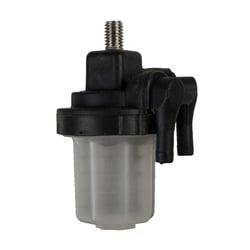
- Water: The enemy of combustion efficiency. Water can enter through condensation inside partially filled fuel tanks — a common issue for boats and seasonal RVs. In water-separating filter designs, water is heavier than fuel and sinks to a collection bowl at the bottom of the housing, where it can be drained away before it ever reaches the engine.
- Ethanol-related contamination: Modern ethanol-blended gasoline (such as E10) is hygroscopic — meaning it readily absorbs moisture from the surrounding air. When enough water accumulates, a process called phase separation occurs, creating a corrosive water-ethanol layer at the bottom of the tank that can be catastrophic if ingested by the engine. This challenge has driven widespread adoption of dedicated fuel/water separating filters in gasoline-powered marine applications.
- Gummy residues and varnish: Gasoline degrades over time, especially during off-season storage, depositing sticky residues that can foul carburetors and injectors alike.
Types of Gasoline Filters for RV and Marine Use
Understanding the available filter types helps you choose the right setup for your engine and installation:
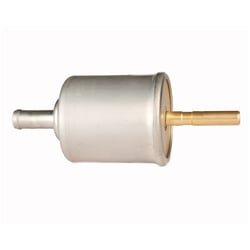
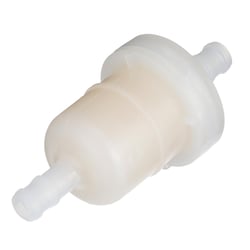
- Inline filters: The simplest option, installed directly within the fuel line. Inline marine fuel filters provide basic filtration for small debris and contaminants, and are a popular, affordable choice for smaller outboard engines.
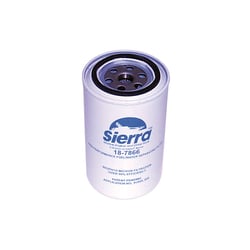
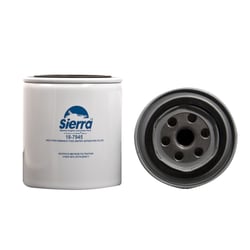
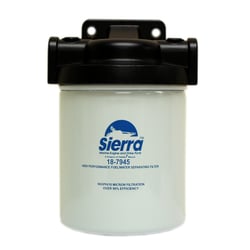
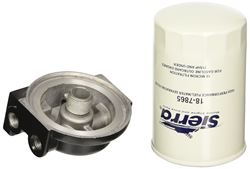
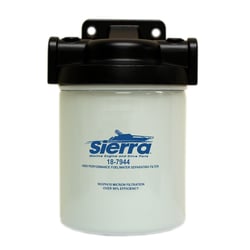
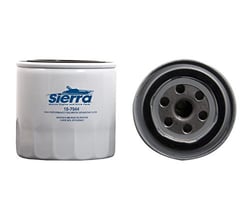
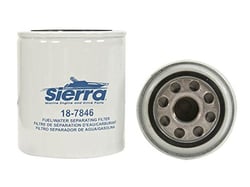
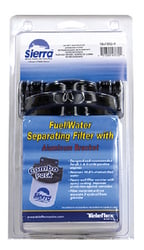
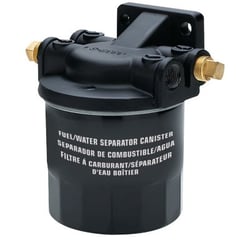
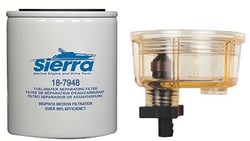
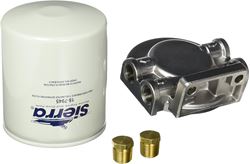
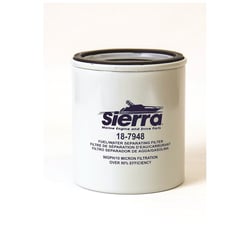
- Spin-on fuel filter/water separators: Widely used in marine applications, these combine particle filtration with water separation in a single canister. They're easy to service — the entire element is replaced when spent — and many feature a clear collection bowl for easy visual inspection of accumulated water.
- Turbine-style separators: Found in more demanding inboard and high-output applications, these use a spinning action to encourage water dropout before fuel passes through the filter element.
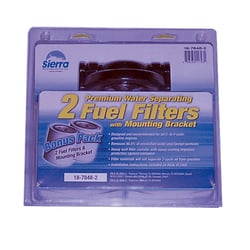
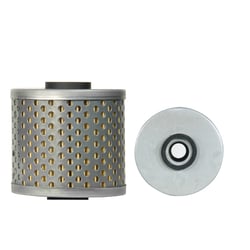
- Primary vs. secondary (engine-mounted) filters: Best practice for gasoline-powered boats and RVs is often a two-stage approach. A primary filter (off-engine, usually a fuel/water separator) sits between the tank and the engine, capturing bulk debris and water. A secondary filter, typically mounted on or near the engine itself, catches finer particles and provides a last line of defense for fuel injectors and carburetors.
How to Choose the Right Gasoline Filter
Selecting the correct filter involves more than just picking a familiar brand. Key considerations include:
- Micron rating: Common marine gasoline filter elements range from 10 to 30 microns. A 10-micron primary filter removes the majority of particles large enough to cause damage, while a finer secondary filter on a fuel-injected engine catches what remains.
- Flow rate (GPH): The filter must be sized to match the fuel flow demand of your engine — not just its fuel consumption. A filter that is undersized for the projected gallons-per-hour can restrict flow and starve the engine.
- Bowl material and ignition protection: For inboard gasoline engines in enclosed engine spaces, applicable marine safety standards specify that clear plastic sight bowls are not permitted due to the fire hazard posed by flammable vapors. Outboard applications typically allow clear bowls, which make water monitoring easy.
- Maintenance interval: Most marine fuel filters should be inspected each boating season and replaced at least once per year, or according to the engine manufacturer's maintenance schedule — more frequently if operating in high-humidity environments or using older, contaminated fuel sources.
For seasonal RV owners, it's also worth remembering that generators benefit from the same fuel filter maintenance discipline as the main engine. Any gasoline-powered system that sits unused for extended periods is vulnerable to fuel degradation and water ingestion — making a quality, properly serviced gasoline filter one of the simplest and most important investments in long-term reliability.