



Mushroom Anchors
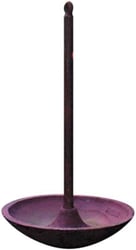

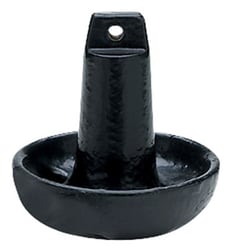
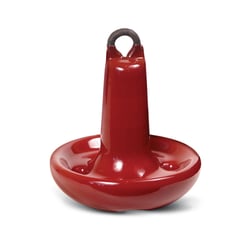

Greenfield Products 515-W Cast Iron Mushroom Anchor PVC Coated for Boats Up to 12'
Greenfield Products 515-B Cast Iron Mushroom Anchor PVC Coated for Boats Up to 16'
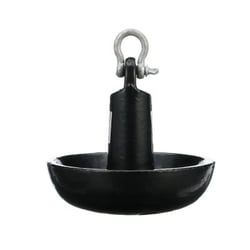
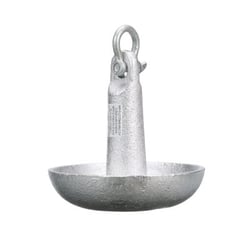
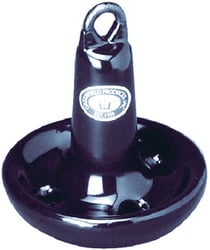
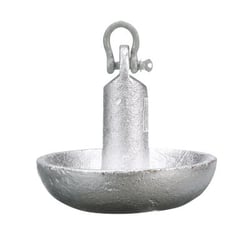
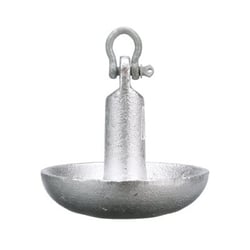
 Representative Photo, actual item may vary
 Representative Photo, actual item may vary
What Is a Mushroom Anchor?
Mushroom anchors are one of the most recognizable anchor designs in recreational boating. Named for their instantly identifiable shape, mushroom anchors feature a wide, concave bowl atop a central shaft — essentially an inverted mushroom cap. This geometry is the key to how they work: when lowered to the bottom, the bowl sinks into soft sediment and, over time, displaces enough material to create a powerful suction-like hold.
How Mushroom Anchors Work
Unlike fluke or plow anchors that rely on digging in at an angle, mushroom anchors work through a combination of weight and suction. Once the bowl settles into a soft seabed, the surrounding mud or silt fills in around and above it, dramatically increasing its holding power the longer it stays in place. In fact, after an extended soak, the entire anchor can work its way below the surface of the bottom.
This mechanism makes mushroom anchors uniquely well-suited to specific environments. They excel in soft seabeds like mud, silt, and soft clay, where the bowl can bury itself deeply and create a reliable hold. However, they are generally less effective in sandy, rocky, or hard-packed bottoms, where the anchor cannot embed itself securely.
Common Uses for Mushroom Anchors
Mushroom anchors span a wide range of applications depending on their size and weight:
- Small boats and kayaks: Lightweight mushroom anchors — typically ranging from just a few pounds up to around 15 lbs — are a popular choice for canoes, jon boats, kayaks, and small fishing skiffs operating in calm, muddy lakes and rivers. They're easy to deploy single-handedly and retrieve quickly.
- Lunch hook and swim stops: Because they're compact and simple to handle, mushroom anchors serve as an ideal secondary or stern anchor during short stops, keeping a boat aligned or preventing it from swinging in light conditions.
- Permanent and semi-permanent moorings: Heavier mushroom anchors — often 75 lbs, 100 lbs, or more — are a traditional choice for permanent mooring setups, where they are left in place long enough for the seabed to fully encapsulate them. Many marinas and mooring fields specify minimum anchor weights based on vessel size and local conditions.
- Buoy anchoring: Mushroom anchors are also widely used to anchor mooring buoys and racing marks in soft-bottom harbors.
Materials and Finishes
Most mushroom anchors are constructed from cast iron, chosen for its density and durability in demanding marine environments. The weight of cast iron is essential to the anchor's function — a heavier anchor sinks faster and develops holding power more quickly. Two primary finish types are common:
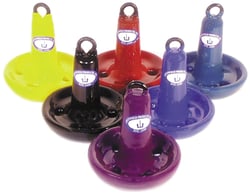
- Vinyl-coated / plastic-coated: A layer of vinyl or polymer applied over the cast iron protects the anchor from corrosion and, importantly, shields your boat's hull, gel coat, and deck from scratching when the anchor is stowed aboard.
- Hot-dip galvanized: A zinc coating applied through a hot-dip process offers robust corrosion resistance, making galvanized mushroom anchors a practical choice for saltwater use where bare iron would corrode rapidly.
Choosing the Right Mushroom Anchor
Selecting the correct mushroom anchor comes down to three key factors: vessel size, bottom conditions, and intended use. As a general rule, heavier vessels require heavier anchors — and when setting a permanent mooring, it is always worth consulting your local harbormaster, who may have published requirements for minimum anchor weight in that body of water. If you frequently anchor in sandy or rocky conditions, a fluke or plow anchor will serve you better; but for soft mud bottoms and permanent moorings, the mushroom anchor remains a trusted, time-tested solution.