



Battery Isolators & Voltage Sensitive Relays
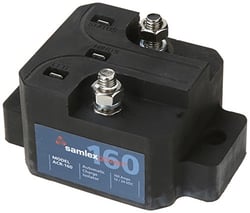

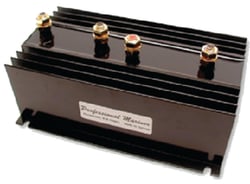

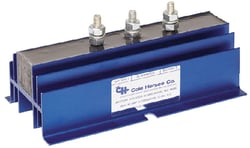

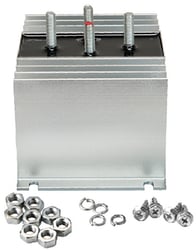

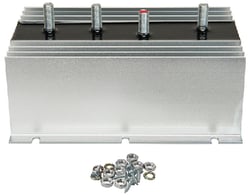
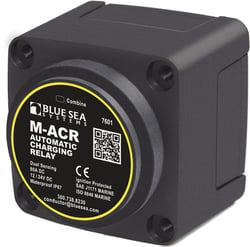

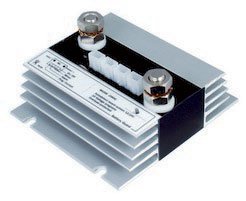
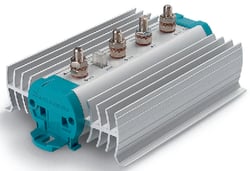

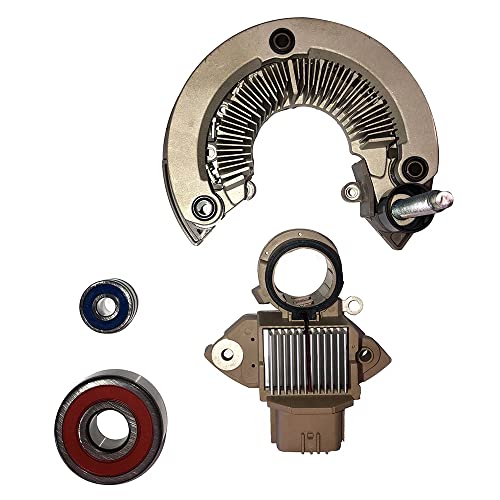 Representative Photo, actual item may vary

What Are Battery Isolators and Voltage Sensitive Relays?
Anyone who has ever woken up to a dead starter battery after a night aboard their boat or in their RV understands exactly why battery isolation matters. Battery isolators and voltage sensitive relays (VSRs) are the unsung heroes of multi-battery electrical systems, ensuring that your house loads never rob your starting battery and that every bank stays properly charged while underway or connected to shore power.
At their core, these devices serve a single critical purpose: battery isolators and VSRs allow current to flow from a charging source — such as an alternator or shore charger — to multiple battery banks simultaneously, while keeping those banks isolated from each other during discharge. This means your refrigerator, lights, electronics, and other house loads draw only from the auxiliary bank, leaving the starting battery untouched and ready to fire the engine every time.
How Battery Isolators Work
Traditional diode-based isolators use silicon diodes that act like one-way valves — current passes from the charging source to the batteries, but cannot flow backward from one battery to another. This prevents either bank from depleting the other, though diode-based designs do introduce a small voltage drop of approximately 0.7 volts across the diodes, which can slightly reduce charging efficiency without remote voltage sensing compensation.
Voltage Sensitive Relays (VSRs), also known as Automatic Charging Relays (ACRs) or battery combiners, take a smarter approach. A VSR monitors the voltage of the primary battery and, once it detects a charging condition — typically when voltage rises to around 13.2V to 13.7V — it closes a relay to connect and charge the secondary bank. When the engine shuts down and voltage drops below the threshold, the relay opens, isolating the banks so that house loads cannot drain the starter battery. This automatic, no-intervention operation makes VSRs especially popular in RV and marine applications where simplicity and reliability are paramount.
Diode Isolator vs. VSR: Which Should You Choose?
- Diode Isolators are fully solid-state with no moving parts, offering exceptional durability. They work well with remote-sensing chargers and regulators that can compensate for the inherent voltage drop.
- Voltage Sensitive Relays (VSRs / ACRs) introduce negligible voltage drop and simplify system design, since chargers and regulators calibrated for a single bank will still work correctly across multiple banks.
- Electronic/MOSFET Isolators combine the best of both worlds — solid-state construction with active voltage drop compensation — delivering near-zero voltage loss and fast, complete charging even without alternator adjustments.
Key Considerations When Shopping
When selecting a battery isolator or VSR, match the device's continuous ampere rating to at least your alternator's maximum output. For marine environments, look for waterproof, corrosion-resistant housings — ideally with an IP67 or IP68 rating — since moisture and vibration are constant factors aboard a boat. RV and off-road applications demand robust thermal management and shock resistance. Also confirm compatibility with your battery chemistry; mixed systems pairing lead-acid starter batteries with lithium house banks may require advanced isolators with smart monitoring or programmable charge settings.
Top Brands in Battery Isolators & Voltage Sensitive Relays
MasterVolt is a globally respected name in off-grid marine and RV power systems. Their lineup includes the BI Series solid-state diode isolators — compact, fully solid-state units designed to prevent wear — as well as the advanced Battery Mate, which uses MOSFET transistor technology to compensate for voltage drop and ensure fast, complete charging across multiple banks without requiring alternator adjustments.
Pro Mariner has built its reputation over four decades as an industry leader in marine battery charging and management. Their ProIsoCharge series delivers digitally controlled alternator output distribution with intelligent software that prioritizes whichever battery bank is under the heaviest load, while their traditional multi-bank isolators feature gold-plated terminals and IP68-rated construction built to handle demanding on-water conditions.
Blue Sea Systems is widely trusted in the marine electrical community for rigorous engineering and comprehensive technical documentation. Their Automatic Charging Relay (ACR) products are designed to simplify multi-battery system design — because chargers and regulators calibrated for a single battery bank will still work correctly across multiple banks when an ACR is in the circuit — making them a favorite among both professional marine electricians and serious DIYers.