



Seacocks
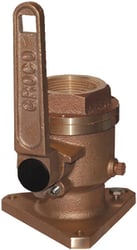

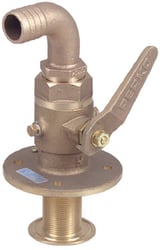

Perko 0834007PLB 1-1/4" Bronze Ball Valve Seacock with 90° Curved Tail Piece
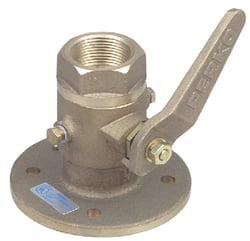
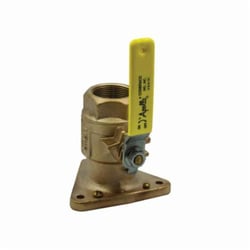

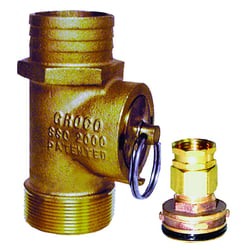
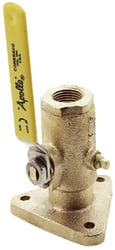
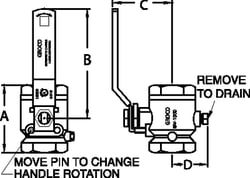
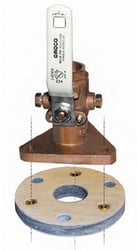
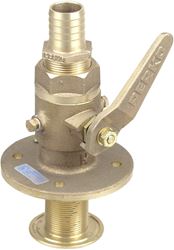
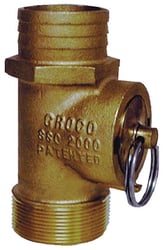
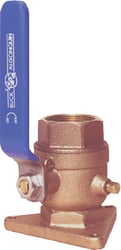

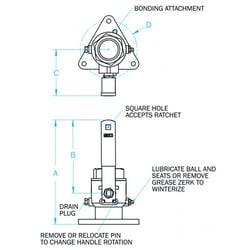
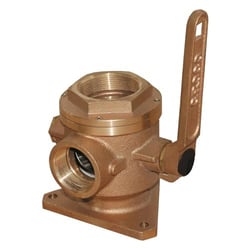
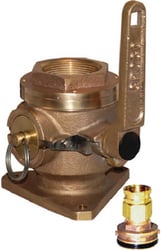
Conbraco/Apollo 78-118-01 Sea-Flange Ball Valve 1 Inch Full Flow Marine Seacock
Conbraco/Apollo 78-116-01F Sea-Flange Bronze Ball Valve 1-1/2 Inch Full Flow
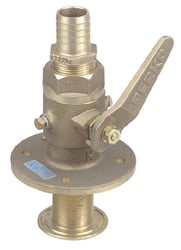
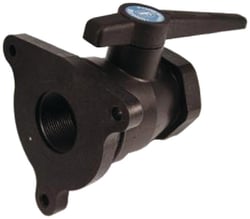
What Is a Seacock and Why Does It Matter?
Seacocks are among the most critical safety components on any vessel. A seacock is a valve mounted in the hull of a boat at every point where water is permitted to pass through — whether to supply raw water to the engine cooling system, feed the marine head, drain a sink, or service a bilge pump. Without a properly functioning seacock at each of these hull penetrations, a single failed hose or cracked fitting could spell disaster.
Systems like the marine toilet, engine raw water intake, and generator cooling lines all rely on water passing through the hull. A failed hose, cracked fitting, or loose clamp on these systems can quickly introduce high-pressure water into the boat's interior — and a closed seacock is the only component capable of stopping that flow at its source. It's no exaggeration to call seacocks emergency equipment: when you need them to work, you absolutely need them to work.
How Seacocks Work
The modern standard for marine seacocks is the ball valve design. A perforated ball rotates 90 degrees — just a quarter-turn of the lever handle — to move between fully open and fully closed. The handle position makes valve status immediately clear: aligned with the flow path means open, perpendicular means shut. This quick action is critical in both everyday use and emergency response. Older gate valve designs, which use a sliding plate mechanism, are strongly discouraged and are actually prohibited in NMMA-certified boats by the American Boat and Yacht Council (ABYC). They are prone to seizing, and you can't tell at a glance whether they're open or closed.
The ABYC also mandates that every seacock assembly withstand a 500-pound load applied to the tailpipe — a standard that rules out standard household plumbing ball valves, which may look similar but are wholly unsuitable for marine use. Always look for UL-listed marine seacocks when shopping for replacements or upgrades.
Choosing the Right Material
Marine seacocks come in two primary materials, each with distinct advantages. High-grade bronze has long been the preferred metal choice, valued for its resistance to dezincification — the selective leaching of zinc from copper alloys that causes standard brass fittings to become porous and brittle in saltwater. High-strength composite materials, such as fiberglass-reinforced nylon, are also widely used. These composites offer complete immunity to galvanic and electrolytic corrosion since they are non-metallic, making them an excellent option especially on aluminum or steel hulls where galvanic concerns are elevated.
Regardless of material, seacocks should be "exercised" — opened and closed through their full range — at least once a month to prevent the internal ball and seals from seizing due to marine growth or mineral buildup. Annual lubrication and inspection for dezincification or corrosion are equally important for long-term reliability.
Top Seacock Brands
When it comes to trusted names in marine seacocks, a few manufacturers stand above the rest:
- Groco — Founded in 1918 and a family-owned American manufacturer for over a century, Groco is the dominant name in bronze marine seacocks and valves. Their UL-listed flanged seacock lines, including the FBV and BV Series, feature solid bronze construction, machined PTFE seals, patented selectable handle rotation, and integrated grease zerk fittings for onboard lubrication without dismantling the valve — practical innovations that set them apart in the boatyard.
- Forespar — Forespar is the leading name in non-metallic marine seacocks, producing their flagship Marelon® line of glass-reinforced polymer composite valves. Marelon seacocks are completely corrosion-free, electrolysis-free, ABYC-compliant, and pass the same stringent UL tests as bronze — making them an especially popular choice for sailors looking to eliminate galvanic corrosion concerns entirely.
- Conbraco/Apollo — Conbraco/Apollo brings decades of industrial and marine valve manufacturing expertise to the seacock category, offering robust ball valve solutions known for reliable shut-off performance and broad size availability across a wide range of marine plumbing applications.