



Battery Disconnect Switches
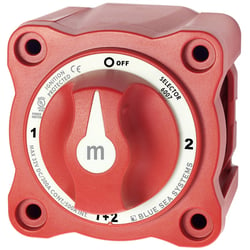

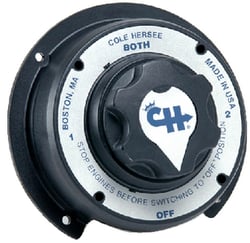
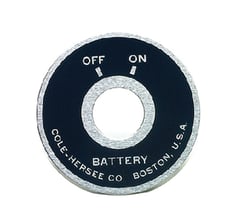

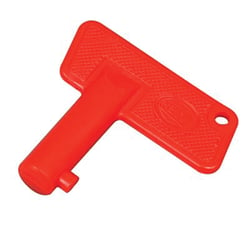

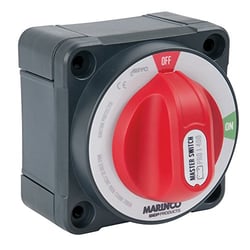

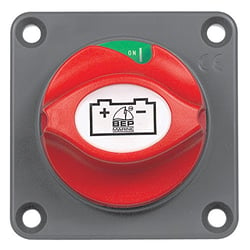
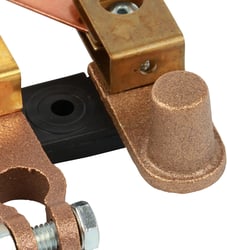
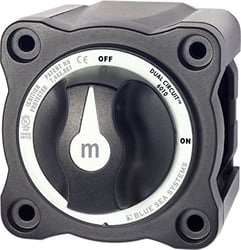
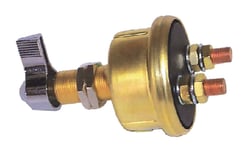

 Representative Photo, actual item may vary



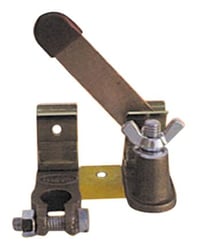
WirthCo 20148 Battery Disconnect Knife Switch for Top Post Batteries with Wing Nut

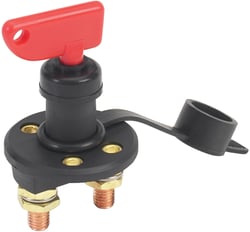

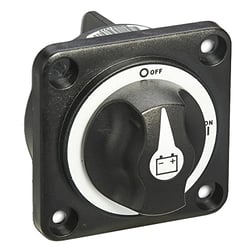
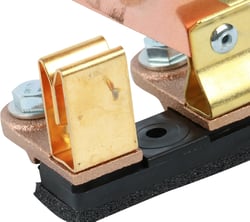
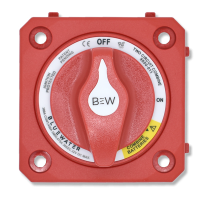 Representative Photo, actual item may vary
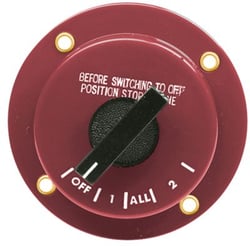
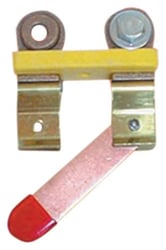
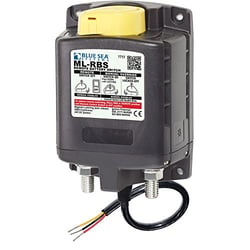
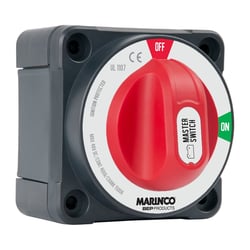
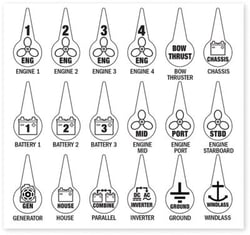
Blue Sea Systems 7902-BSS Battery Switch Icon Label Kit - 18 Circuit Identification Labels
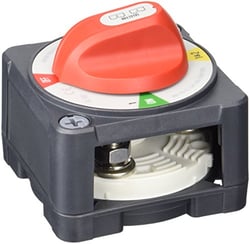
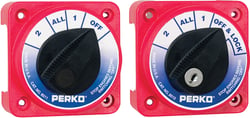
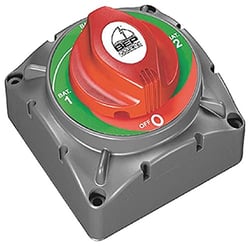
BEP Marine 771-S-EZ Pro Installer 400A EZ-Mount Battery Selector Switch 1-2-Both-Off
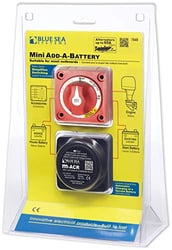
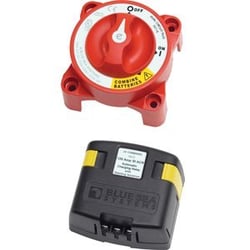
Blue Sea Systems 7650003 Add-A-Battery Kit Dual Circuit Battery Management System

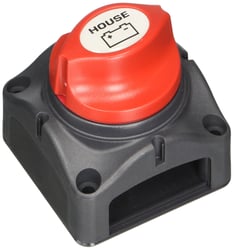
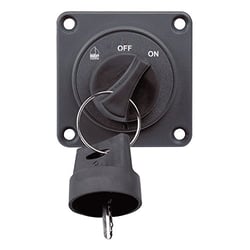
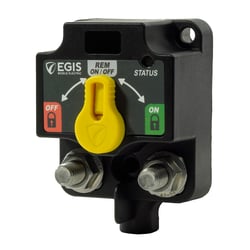
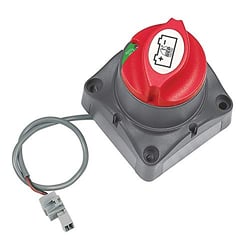
BEP Marine 80-724-0006-00 Remote On/Off Key Switch for 701-MD & 720-MDO Battery Switches
What Is a Battery Disconnect Switch?
A battery disconnect switch — also known as a battery cutoff switch, master switch, or kill switch — is one of the most practical and cost-effective electrical upgrades you can make to an RV, boat, or any vehicle that sits idle for extended periods. Its core function is simple but vital: it creates a complete break in the electrical circuit between your battery and the rest of the vehicle's electrical system, giving you total control over your power at the flip of a switch or turn of a knob.
Modern vehicles, RVs, and marine craft are loaded with electronics — GPS units, stereos, lighting controllers, monitoring systems — and even when everything appears to be "off," these systems draw small but continuous amounts of current. This phenomenon, known as parasitic drain, can silently kill a battery over days or weeks of inactivity. A quality battery disconnect switch eliminates that drain instantly by physically opening the circuit, so no component can receive power until you choose to restore it.
Why Battery Disconnect Switches Matter for RV & Marine Use
RVs and boats are uniquely vulnerable to battery problems. These vessels often sit in storage for weeks or months at a time, and their complex electrical systems — running everything from bilge pumps to slide-out motors to refrigerators — place enormous demands on battery banks. Working on your RV's or boat's electrical system without a reliable cutoff point can also be genuinely hazardous: a slipped wrench across live terminals can cause dangerous arcing, fry sensitive control boards, or even ignite flammable materials nearby.
A battery disconnect switch addresses all of these concerns in one straightforward installation. Beyond preventing drain and enabling safe maintenance, switches with removable keys or locking mechanisms also serve as an effective theft deterrent — a vehicle simply cannot be started when its battery circuit is broken.
Types of Battery Disconnect Switches
- Manual Rotary Switches: The most common type, these heavy-duty switches use a lever, handle, or knob to physically break the circuit. They draw zero power in either state, making them ideal for long-term storage applications in RVs and boats.
- Keyed Disconnect Switches: Similar to rotary switches but operated with a removable key, these add an anti-theft dimension — take the key with you and no one can restore power to the vehicle.
- Remote Battery Disconnect Switches: Controlled via a remote key fob or panel-mounted button, these offer convenience when the battery is in a hard-to-reach location, such as deep in a bilge or under an RV's storage compartment.
- Latching Solenoid Switches: Electronically controlled switches that use a brief electrical pulse to change state, then hold their position without drawing continuous power — a smart choice for integrated RV electrical systems.
- Push-Button Emergency Cutoff Switches: Designed for rapid disconnection in an emergency, these are often found in racing and commercial marine applications where speed of disconnect is critical.
Key Considerations When Shopping
Choosing the right battery disconnect switch comes down to a few essential specifications. Current (amperage) rating is the most critical factor — your switch must meet or exceed the maximum current draw of your electrical system. Most standard 12V RV and marine applications require at least 200 amps continuous, while heavy-duty setups with diesel engines, inverters, or large battery banks may demand 300 amps or more. Always match your switch's voltage rating to your system — 12V and 24V are the most common configurations in RV and marine use.
For marine environments specifically, look for switches rated to an appropriate Ingress Protection (IP) standard, ensuring resistance to moisture, spray, and the corrosive effects of saltwater exposure. Mounting style — whether surface-mount or panel-mount — will also influence your installation options. Finally, consider whether you need any integrated safety features like tamper-proof housings, integrated locks, or emergency cutoff capabilities for your particular application.
Whether you're winterizing your RV, commissioning a new boat, or simply looking to safeguard a stored vehicle, a battery disconnect switch is a small investment that delivers outsized returns in battery life, electrical safety, and peace of mind.